
Epoxy-based carbon fiber-reinforced composites (EP-CFRCs) have been widely used in aerospace, automotive manufacturing, and advanced equipment owing to their lightweight characteristics, high specific strength and stiffness, and corrosion resistance. With the increasing demand for high-efficiency manufacturing of new-energy vehicles and lightweight structural components, rapid-curing epoxy systems have attracted growing attention. However, accelerated curing also introduces new challenges. Spatially non-uniform heat release and reaction conversion during rapid network formation can induce residual stress and increase matrix brittleness, thereby compromising the strength-toughness balance of composites. Meanwhile, the high reactivity required for rapid curing shortens the shelf life of prepregs, and premature curing during storage can impair processability and cause material waste. In addition, conventional thermoset EP-CFRCs form permanent crosslinked networks after curing, making post-processing and high-value recycling difficult. Therefore, reconciling rapid curing, mechanical robustness, and thermoset upcycling within one material system remains a key challenge for advanced epoxy composites.
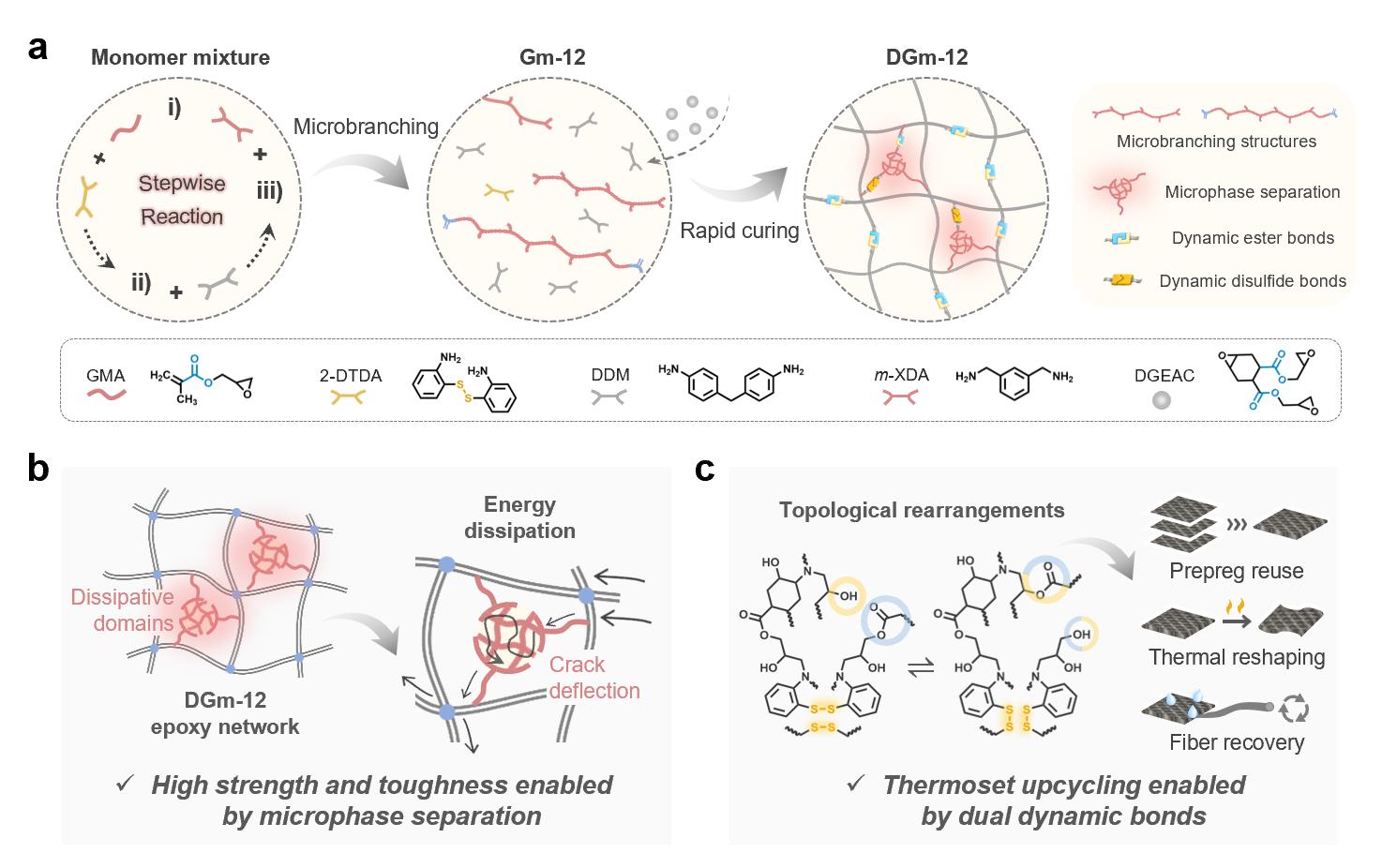
Figure 1. Design, synthesis, and performance investigation of the DGm-12 network.
To address these challenges, the research group of Prof. Jun Hu from the BUCT Advanced Innovation Center for Soft Matter Science and Engineering proposed a “microbranching-stabilized dynamic epoxy network” design strategy and developed a dynamic epoxy system integrating rapid curing, mechanical robustness, and upcycling capability. As shown in Figure 1, the team first leveraged the distinct reactivities of the epoxide and vinyl groups in glycidyl methacrylate to prepare a microbranching-enabled liquid mixed amine curing agent, Gm-12, through stepwise prepolymerization. This curing agent formed a homogeneous liquid-liquid blend with the commercial epoxy monomer DGEAC and enabled complete curing within 10 min at 150°C. Compared with conventional solid-liquid curing systems that rely on dissolution and diffusion of solid curing agents, this liquid curing system enabled molecular-level dispersion of the curing agent, providing a basis for rapid yet homogeneous network formation.During curing, the microbranching structure induced an appropriately microphase-separated DGm-12 dynamic epoxy network. This network preserved a high effective crosslink density to support mechanical strength while introducing dissipative domains that promoted crack deflection and energy dissipation, thereby improving strength and toughness simultaneously. In addition, the dynamic ester and disulfide bonds incorporated into the network endowed the system with hydrolytic degradability and thermally triggered topological rearrangement, respectively, providing the structural basis for expired-prepreg reuse, thermal reshaping of composites, and carbon fiber recovery.
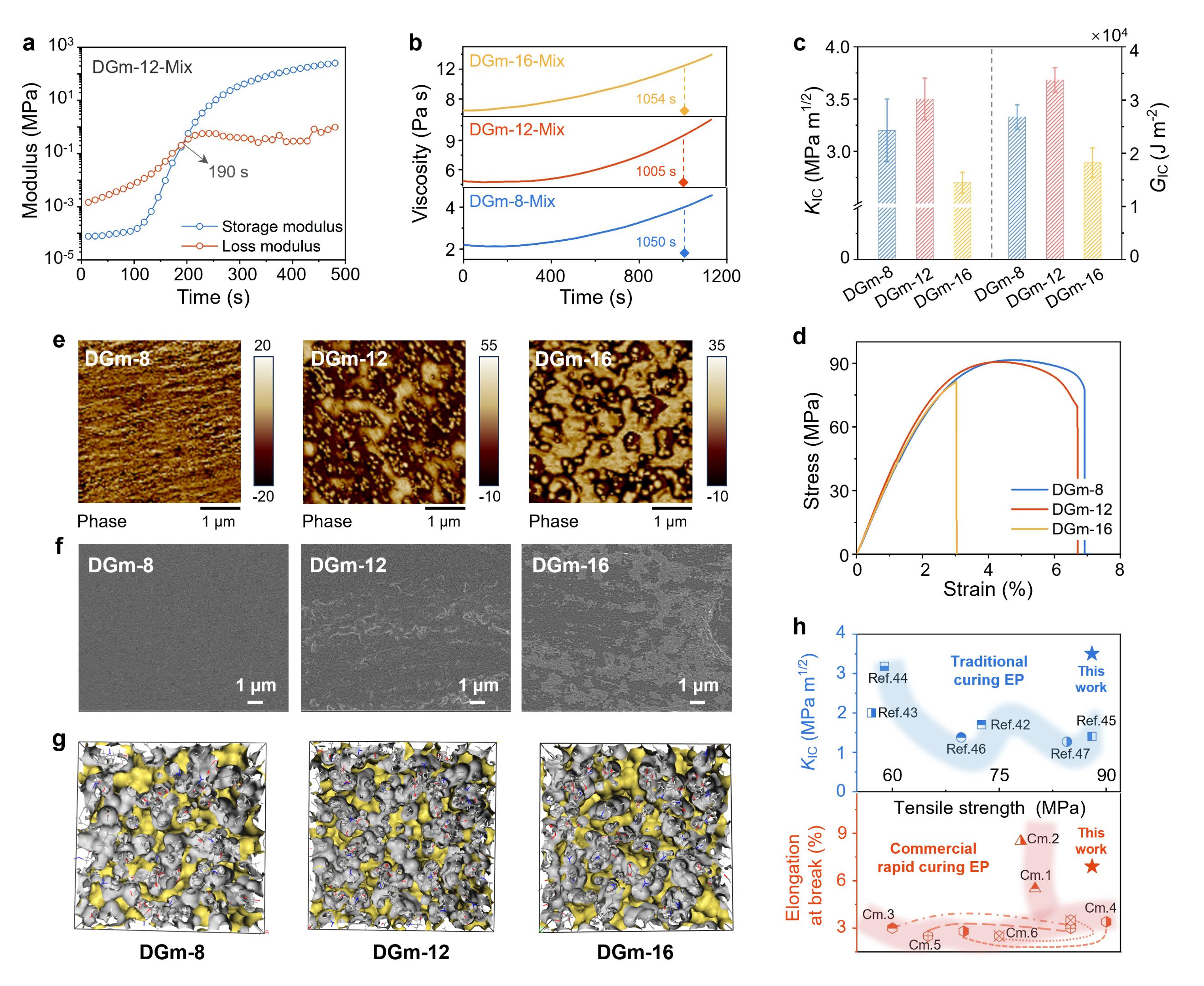
Figure 2.Rapid curing behavior, mechanical properties, and microphase-separated structure of DGm epoxy resins.
The results showed that the DGm system achieved a good balance between rapid curing and processing operability. Rheological and viscosity measurements showed that DGm-12-Mix reached the gel point within approximately 190 s at 120°C, while still retaining a processing window of more than 1000 s at 50°C. These results indicated that the system could form a network rapidly while maintaining sufficient handling time for processing and molding (Figure 2a and 2b). In terms of mechanical performance, moderately microbranched DGm-12 achieved a favorable balance between strength and toughness (Figure 2c and 2d). Micro-morphology and free-volume distribution results further revealed that DGm-12 developed an appropriate microphase-separated morphology, which facilitated crack deflection and energy dissipation while maintaining high network compactness (Figure 2e-2h). Therefore, rational regulation of the microbranching structure was critical for achieving synergistic strength and toughness enhancement in rapid-curing epoxy resins.
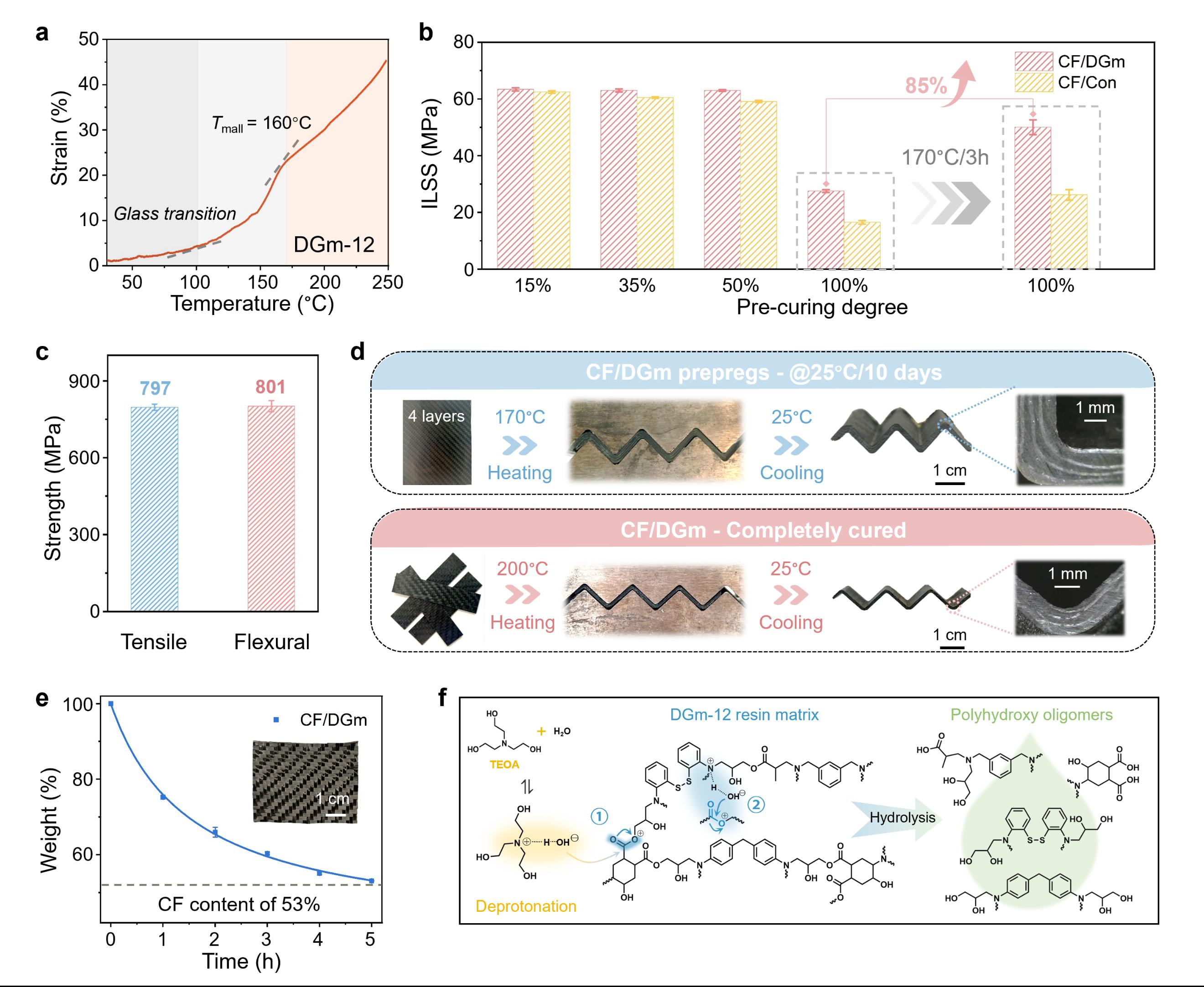
Figure 3. Reuse of CF/DGm expired prepregs, thermal reshaping of composites, and hydrothermal degradation.
Benefiting from the synergistic effect of dynamic ester and disulfide bonds, the DGm-12 network exhibited excellent topological rearrangement capability. DGm-12 entered a rearrangeable state at approximately 160°C, providing the basis for prepreg reuse and thermal reprocessing of composites (Figure 3a). For prepregs with different pre-curing degrees, the interlaminar shear strength of CF/DGm composites remained nearly constant within the 15%-50% pre-curing range (Figure 3b). Even when the prepregs were nearly fully cured, hot pressing at 170°C for 3 h significantly restored their interlaminar performance and enabled molding into an integrated sawtooth structure.Meanwhile, the rapidly cured CF/DGm composites exhibited high structural performance, and the fully cured composites could be reshaped at 200°C, demonstrating post-cure reprocessability that is difficult to achieve in conventional thermoset composites (Figure 3c and 3d). In addition, the DGm-12 matrix gradually degraded in water and released clean carbon fibers (Figure 3e and 3f). These results demonstrated that the dynamic network enabled not only prepreg reuse and composite reshaping, but also carbon fiber recovery through hydrothermal degradation.
Overall, this work proposed an epoxy network design strategy based on microbranching regulation and dual dynamic bonds, enabling rapid curing, strong and tough mechanical performance, and thermoset upcycling in one material system. This strategy alleviated the trade-off between cure homogeneity and mechanical performance during rapid curing, transformed storage-induced pre-reaction from a source of material failure into a viable route for prepreg reuse, and realized thermal reshaping and carbon fiber recovery of thermoset composites. The study provides a new design concept for next-generation recyclable, high-performance epoxy-based carbon fiber composites.
The related work, titled “Microbranching-Stabilized Dynamic Epoxy Networks for Rapid-Curing, Mechanically Robust, and Upcyclable Thermosets,” was published in Angewandte Chemie International Edition. The first author is Dongxu Pei, doctoral students from the BUCT Advanced Innovation Center for Soft Matter Science and Engineering. Prof. Ousheng Zhang from Sinopec (Shanghai) Petrochemical Research Institute Co., Ltd., Prof. Baoyan Zhang from AVIC Manufacturing Technology Institute, and Prof. Jun Hu are the co-corresponding authors. This research was supported by Beijing Natural Science Foundation and the Fundamental Research Funds for the Central Universities. The authors gratefully acknowledge all collaborators for their contributions to this work.
Article information:
Dongxu Pei, Rui Peng, Yucheng Zi, Zihan Zhao, Jianhua Tang, Ousheng Zhang,* Baoyan Zhang,* Jigang Yang, Jun Hu*. Microbranching-Stabilized Dynamic Epoxy Networks for Rapid-Curing, Mechanically Robust, and Upcyclable Thermosets. Angew. Chem. Int. Ed. 2026, e9002258, DOI: 10.1002/anie.9002258
Original article link: https://onlinelibrary.wiley.com/doi/10.1002/anie.9002258

