
Structured liquids, as an emerging class of nonequilibrium soft matter, combine the structural stability of solids with the fluidity of liquids, providing an important platform for the fabrication of fluidic devices and derived functional materials. Early structured liquids mainly relied on the self-assembly of colloidal particles at water/oil interfaces and subsequent jamming transitions. However, this strategy usually requires the particles to exhibit strictly neutral wettability at the interface in order to maximize interfacial binding energy, which places high demands on particle preparation and surface modification. A currently prominent approach is to construct nanoparticle surfactants through the co-assembly of water-dispersible nanoparticles and oil-soluble polymer ligands at water/oil interfaces. Although this method is broadly applicable, it requires the deliberate design of particles and ligands bearing complementary functional groups. In addition, the need to balance interfacial activity and oil solubility further restricts the choice of ligands.
To address these challenges, the research team developed a simple strategy for stabilizing structured liquids using a cyclodextrin derivative, β-CD trimer. This method does not require the addition of extra ligands to the oil phase. Instead, β-CD trimer rapidly assembles at the water/oil interface through host-guest interactions with oil-phase solvent molecules (Fig. 1). By systematically investigating the interfacial assembly of β-CD trimer in three types of water/oil systems, namely water/alkane, water/aromatic hydrocarbon, and water/halohydrocarbon systems, the researchers found that the interfacial binding energy of β-CD trimer differs significantly among these systems. These differences further lead to changes in the mechanical properties of the interfacial assemblies, resulting in distinct liquid shaping and coalescence behaviors (Fig. 2). In particular, structured liquids constructed in aromatic hydrocarbon/water systems exhibit a unique arrested coalescence behavior because the jammed interface contains abundant free volume. Upon contact, coalescence occurs only within the contact region, while the other regions remain structurally unchanged. This finding resolves the long-standing difficulty of reconciling rigid liquid interfaces with controllable coalescence, opening up a new route for the reprocessing of structured liquids and the construction of complex fluidic devices (Figs. 3 and 4).
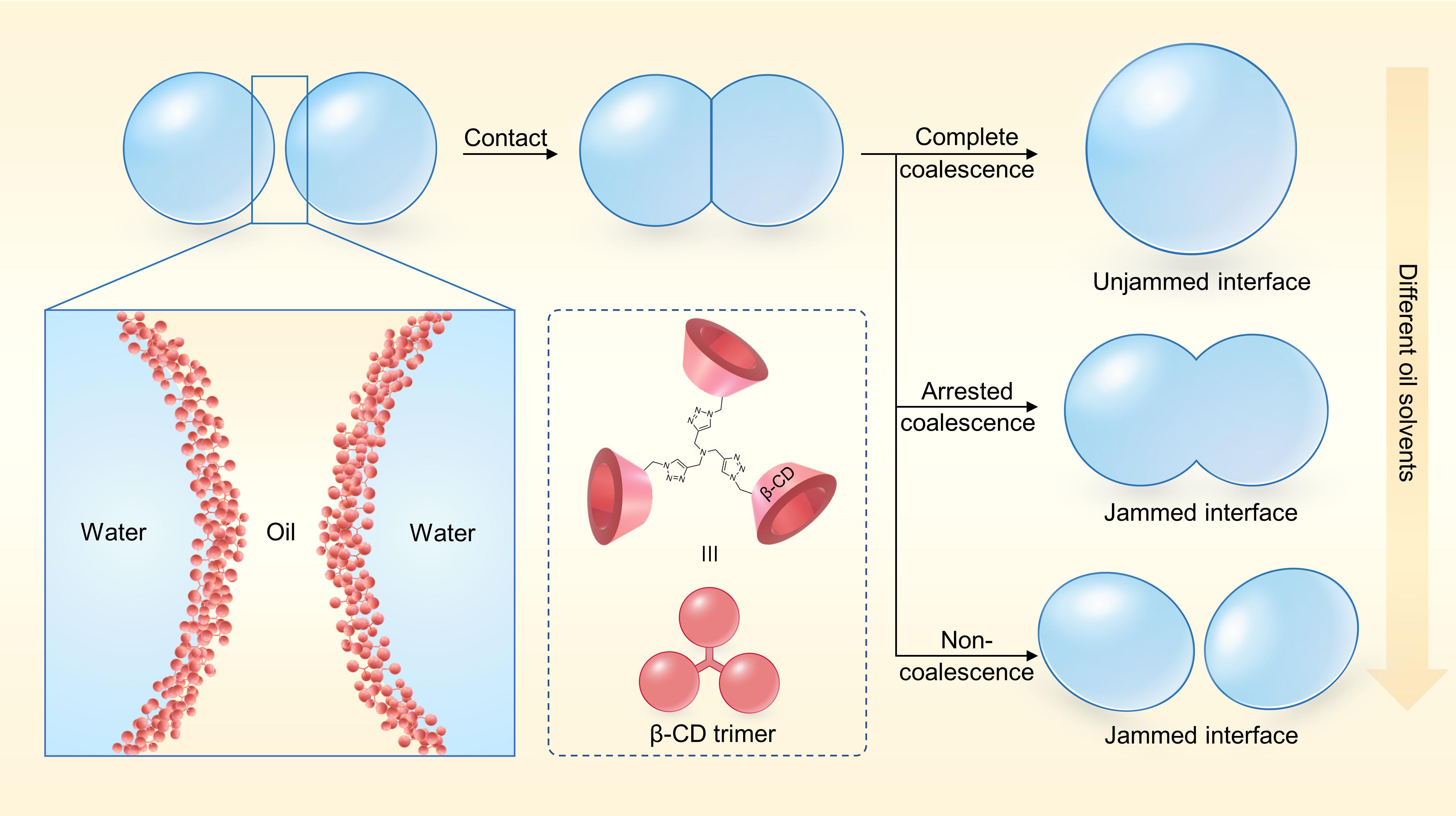
Fig. 1. Schematic illustration of the assembly of β-CD trimer at the water/oil interface
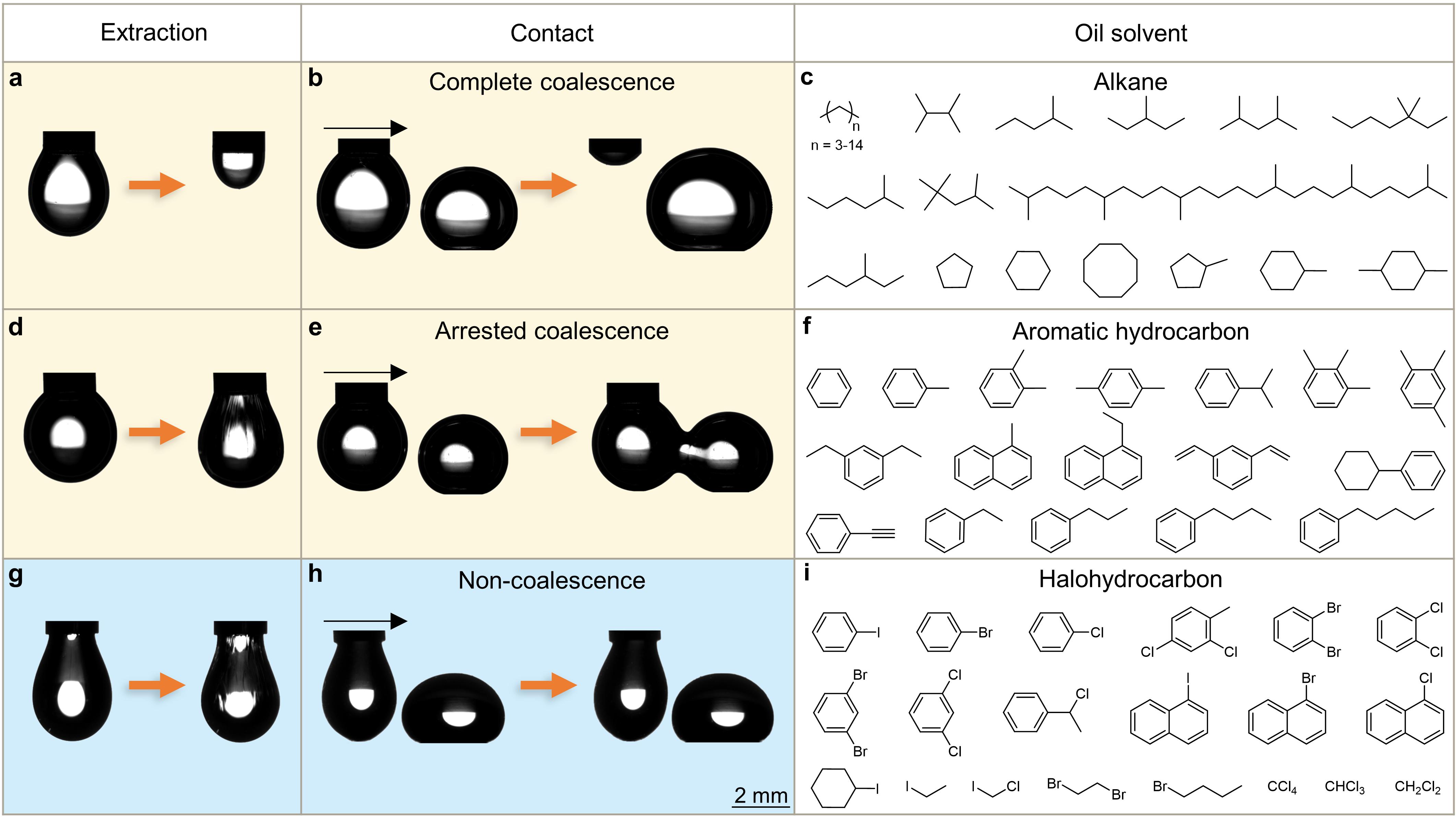
Fig. 2. Shaping and coalescence behaviors of droplets in water/alkane, water/aromatic hydrocarbon, and water/halohydrocarbon systems
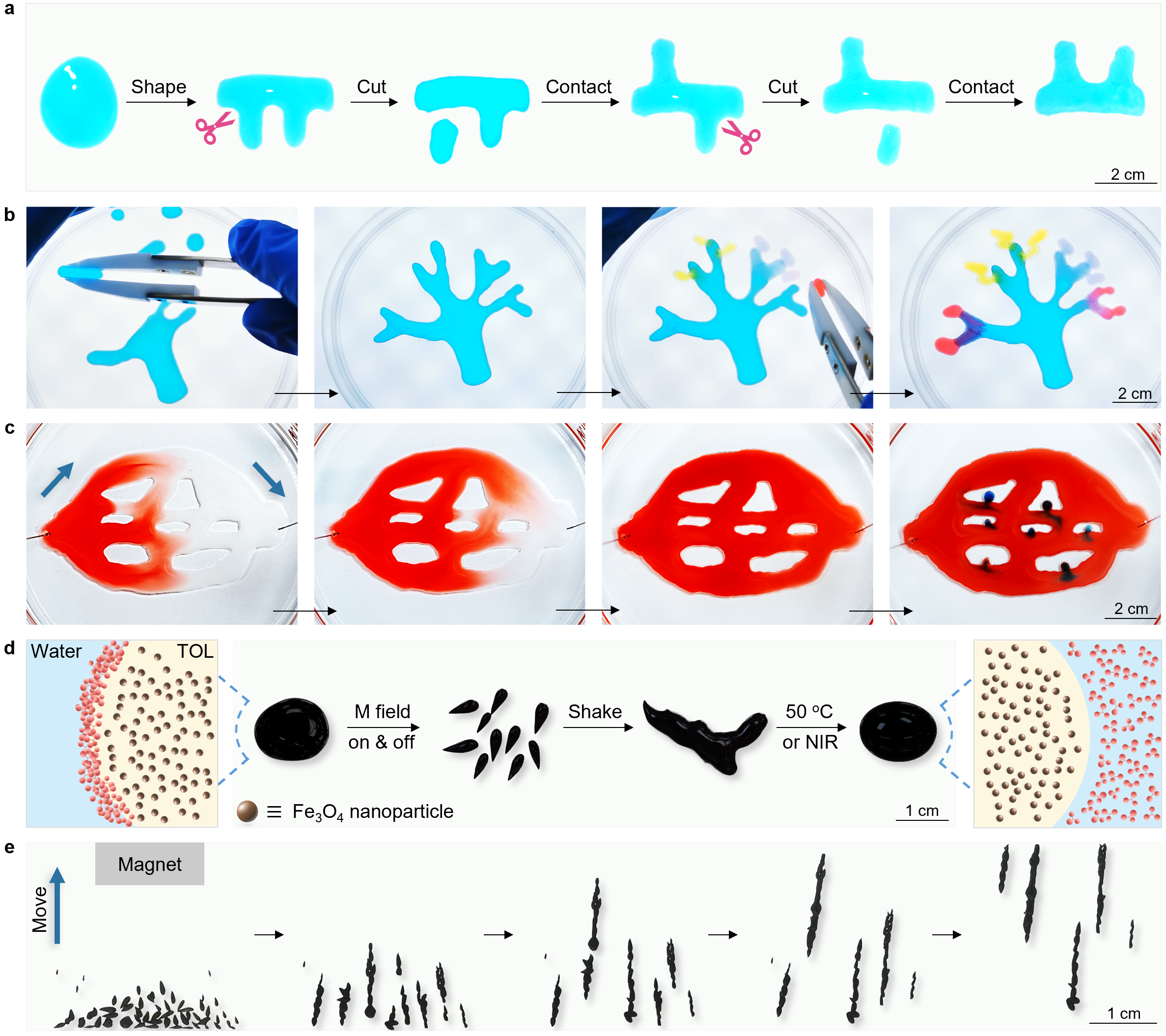
Fig. 3. Construction of complex fluidic structures through arrested coalescence
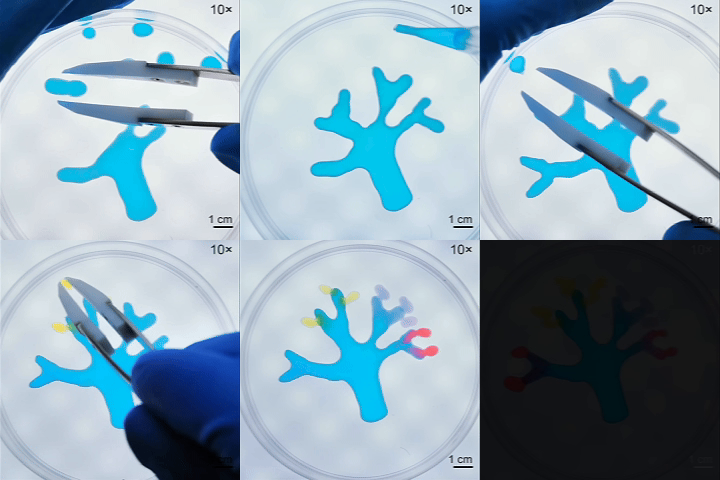
Fig. 4. Construction of a “liquid tree”
This work was published in Nature Communications under the title "Arrested Coalescence in Structured Liquids". The first author is Peifan Li, a master’s student at the Beijing Advanced Innovation Center for Soft Matter Science and Engineering, Beijing University of Chemical Technology, and the corresponding author is Prof. Shaowei Shi. This research was supported by the National Natural Science Foundation of China and the Beijing Natural Science Foundation.
Article information:
Peifan Li, Weixiao Feng, Yunhui Wen, Yuzheng Luo, Xueqing Liu, Shaowei Shi*, Arrested Coalescence in Structured Liquids. Nature Communications, 2026. DOI: 10.1038/s41467-026-71812-2
Link to the article: https://doi.org/10.1038/s41467-026-71812-2

