
The bottom-up construction of prototissues from protocells is an important research direction for understanding the hierarchical assembly of living systems and developing artificial biomimetic systems. However, existing systems often suffer from complicated preparation procedures, reliance on oil-phase environments, limited prototissue size, and insufficient stability. Achieving efficient, controllable, and robust construction of prototissues in aqueous environments has remained a major challenge in this field.
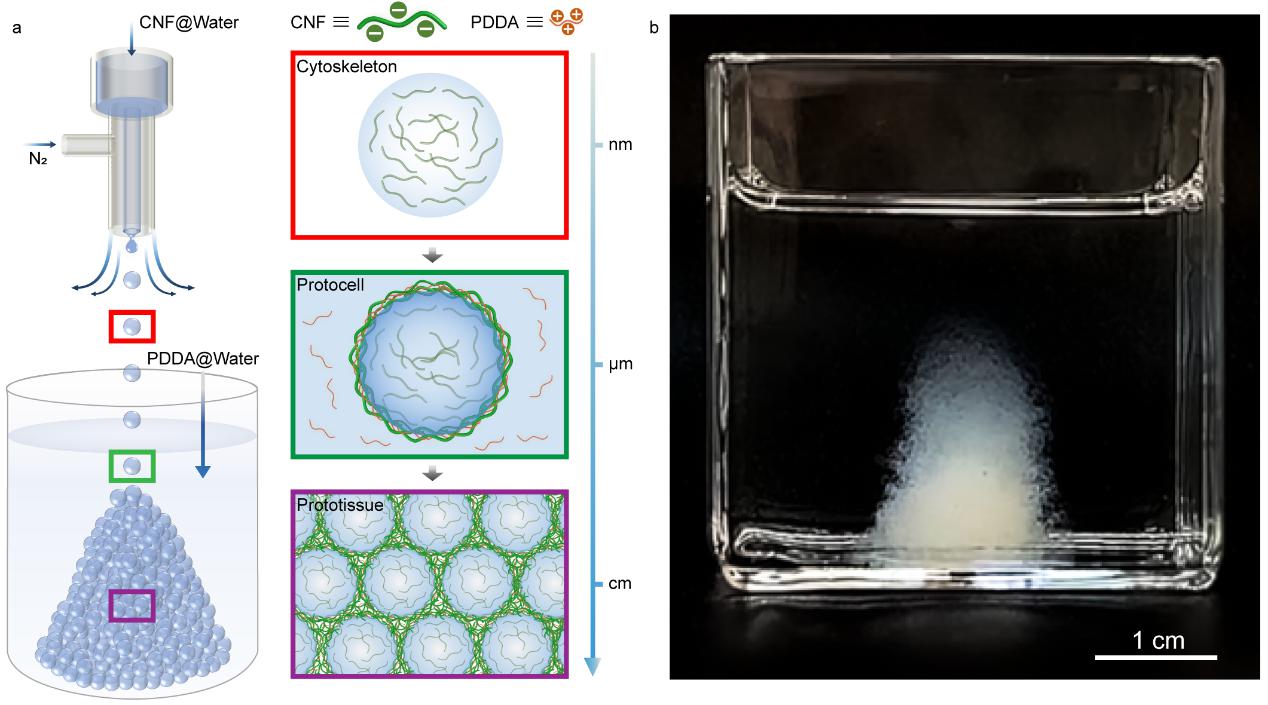
Figure 1. Construction of protocells and prototissues using gas-liquid microfluidics and diffusion-inhibited complexation.
To address these challenges, the research team employed negatively charged cellulose nanofibrils (CNF) and the cationic polyelectrolyte poly(diallyldimethylammonium chloride) (PDDA) as building blocks. By integrating gas-liquid microfluidics with diffusion-inhibited complexation (DIC), they achieved the high-throughput fabrication of protocells. Further regulation of ionic strength induced adhesion between protocells, enabling the construction of large-scale prototissues in aqueous environments (Figure 1). The resulting prototissues exhibited excellent self-supporting capability in both water and air, while maintaining structural stability under external disturbances. By further tuning the functional components of the protocells, the researchers endowed the prototissues with a range of capabilities, including transmembrane mass transport, chemical communication, osmotically driven deformation, and buoyancy- or magnetic-field-mediated motion, demonstrating pronounced biomimetic behaviors (Figures 2 and 3). Compared with prototissues constructed from emulsion droplets or coacervate droplets, this system offers significant advantages in structural stability, scalable fabrication, and functional versatility, providing new opportunities for applications in tissue engineering, synthetic biology, bioinspired soft robotics, and biomedical devices.
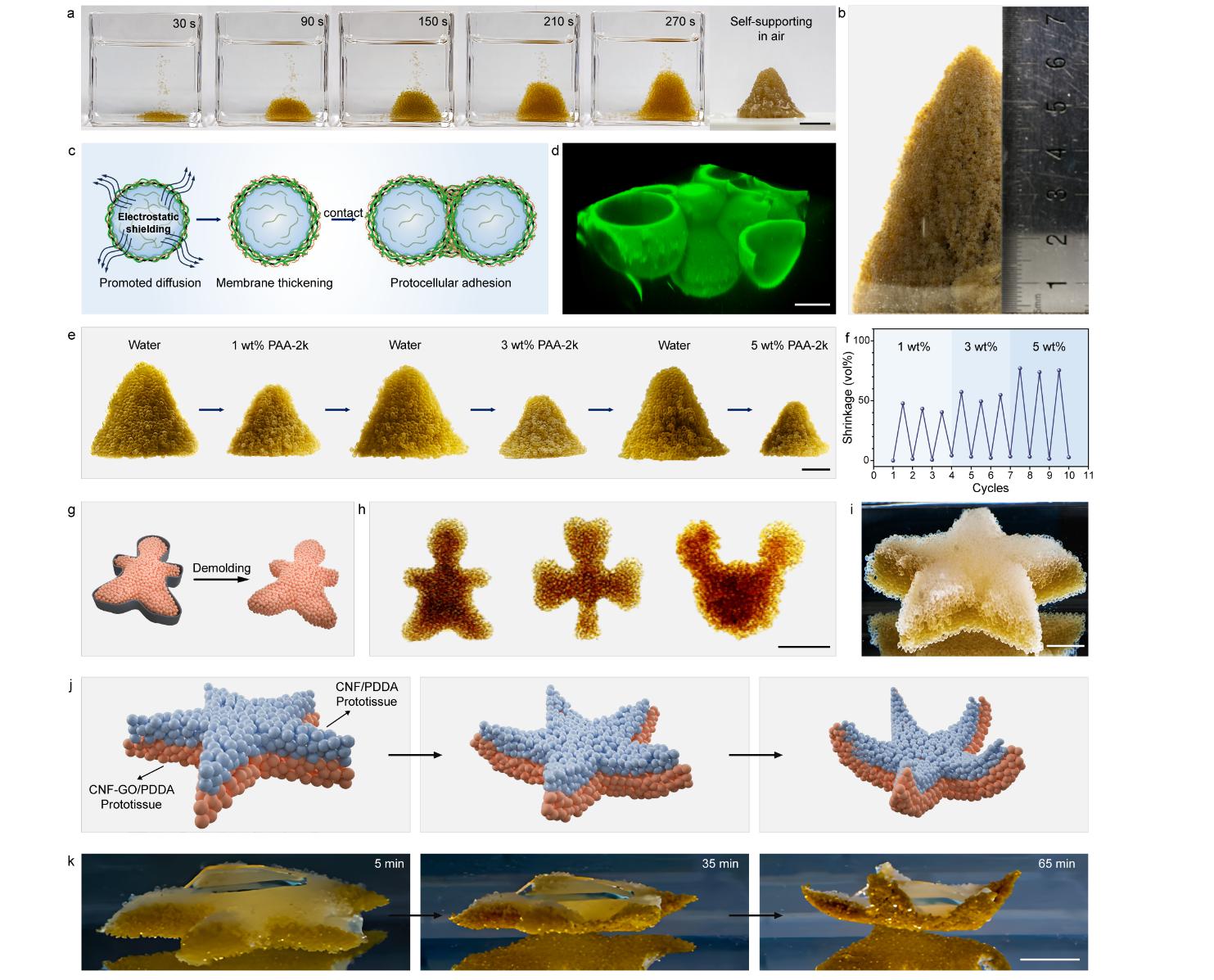
Figure 2. Macroscopic construction, adhesion mechanism, and stimulus-responsive behaviors of prototissues.
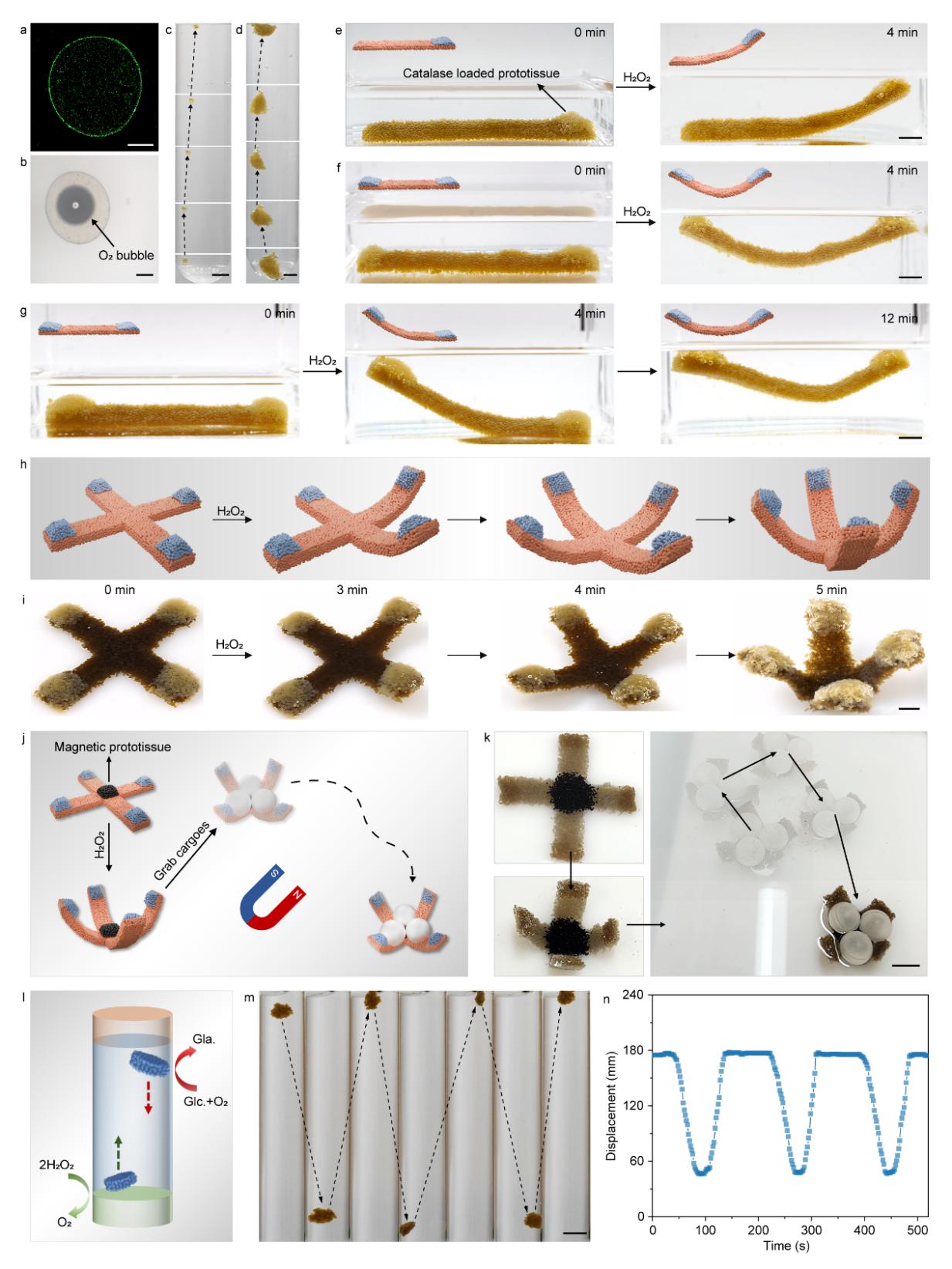
Figure 3. Biomimetic behaviors of prototissues and their application in soft robotics.
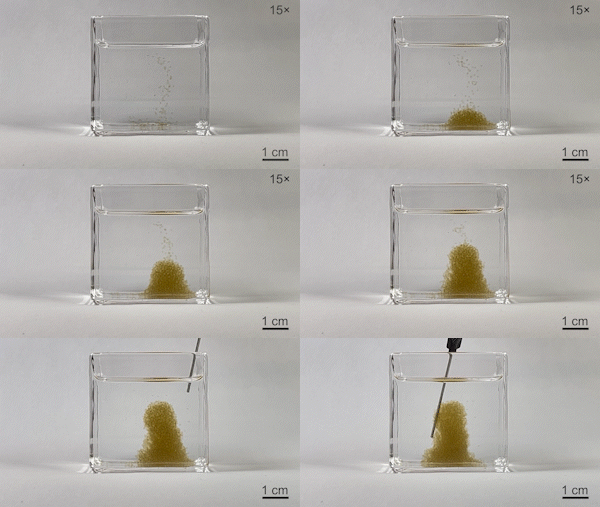
Figure 4. Construction process of prototissue
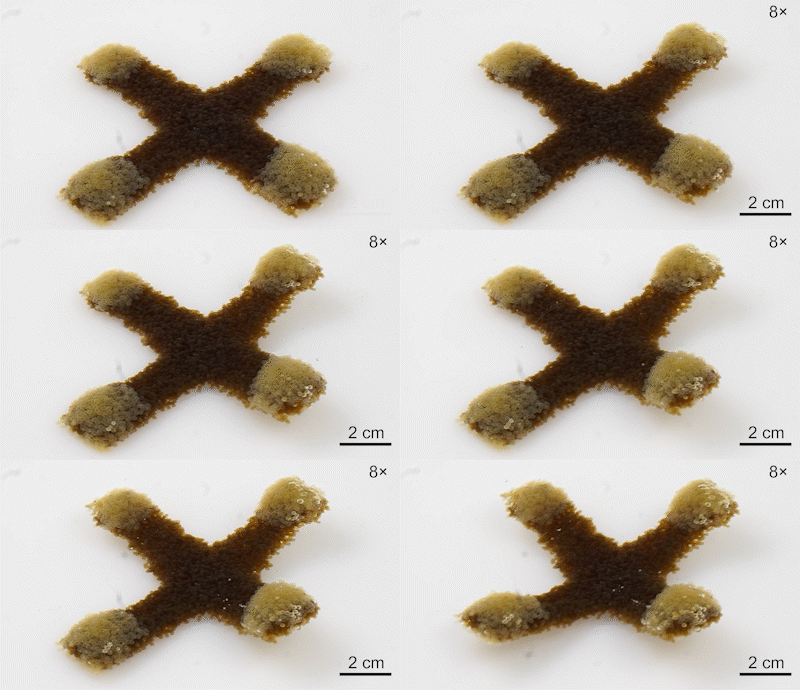
Figure 5. Buoyancy-driven deformation of prototissue in hydrogen peroxide solution
This work was published in Nature Communications under the title “One-Step Construction of Robust Protocells and Prototissues in Water.” The first author is Weixiao Feng, a PhD student at the Beijing Advanced Innovation Center for Soft Matter Science and Engineering, Beijing University of Chemical Technology. The corresponding authors are Professor Fu-Jian Xu of the College of Materials Science and Engineering, Beijing University of Chemical Technology, and Professor Shaowei Shi of the Beijing Advanced Innovation Center for Soft Matter Science and Engineering, Beijing University of Chemical Technology. This research was supported by the National Natural Science Foundation of China and the Beijing Natural Science Foundation.
Article information:
Weixiao Feng, Peifan Li, Xin Li, Ziwei Wang, Min Chen, Yang Hu, Fu-Jian Xu*, Shaowei Shi*, One-step construction of robust protocells and prototissues in water. Nat. Commun. 2026.
Original article link:
https://doi.org/10.1038/s41467-026-71650-2

